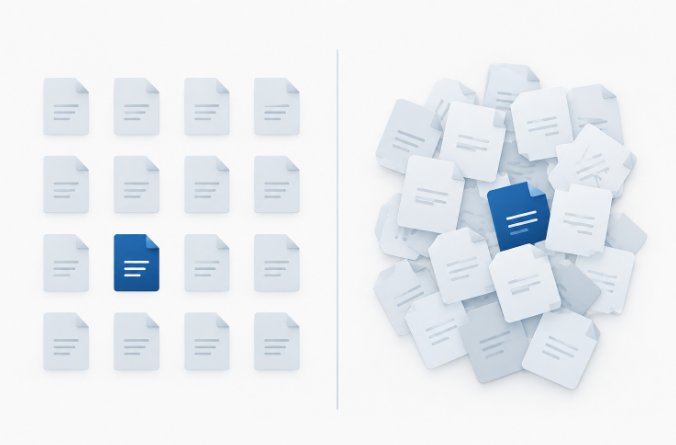
100 assets and four scenarios can turn into 4,000 spreadsheets, and the cost isn’t storage, it’s control. Here’s how to spot the duplication in your own planning process and what to centralise first.
When Does Excel become a planning risk in Oil & Gas?
Most finance teams know the warning signs; “which file is the latest version?” becomes a routine question, not an exception. Here’s how to tell whether Excel is still working for you, or whether it’s become your entire planning architecture.
Why one forecast is not enough for Oil & Gas finance
In volatile markets, one view of the future is not enough. Prices, production, costs and timing can all shift materially, changing outcomes significantly. This article explains why leading organisations use scenario planning in Oracle EPM to understand a range of outcomes, stress test assumptions, and make better, more resilient financial decisions.
Why production and financial forecasts should not live in separate models
If finance has to rework production data every time it changes, forecasting slows down. This article explains how connecting operational and financial drivers in Oracle EPM removes that friction and improves control.
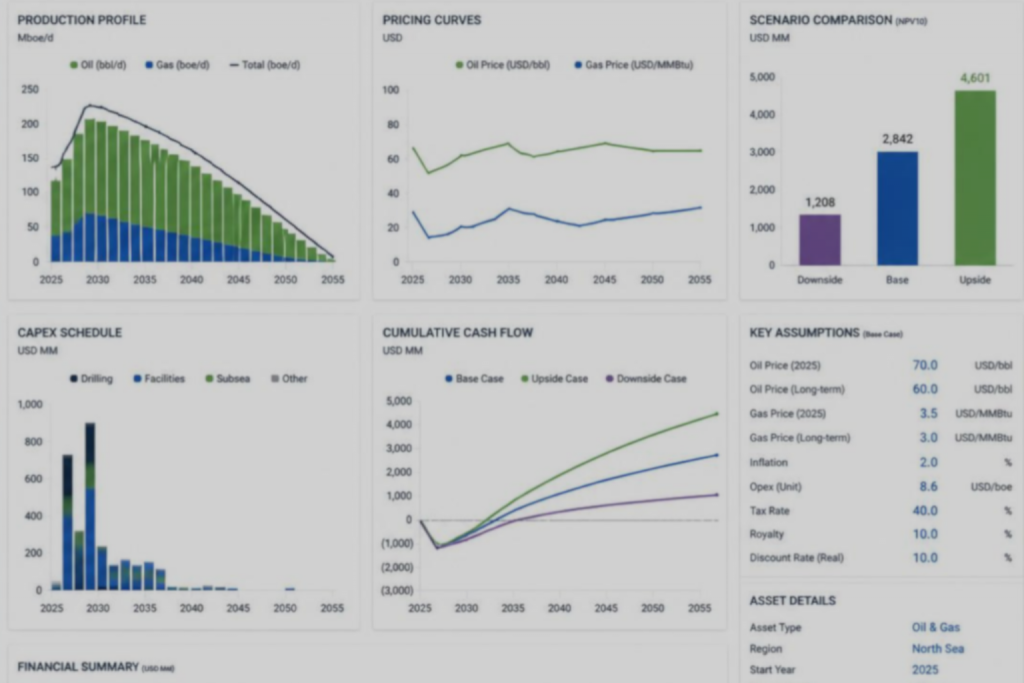
What should an Oil & Gas life-of-field financial model include?
A practical checklist covering production, price, CAPEX, tax, cash flow and Oracle EPM, with a focus on how finance teams connect operational data to long-term decisions.
How resilient is your current planning architecture?
Organisation need a model that can absorb changing assumptions, production, commodity price, cost, project timing, tax and funding, and show their effect on cash flow and returns without rebuilding the forecast every time the market moves.
Why growing Energy companies outgrow spreadsheet-based planning
Explore how why spreadsheets break at scale, how they affect energy finance teams, and what leading companies are doing to modernise their planning processes.
The hidden complexity behind carve-outs and how divestments stress test finance
Divestments create a cleaner business on paper, but a more complex reality for finance. Teams must separate entities, restate data and run parallel reporting, all while meeting ongoing deadlines.
Capital Planning in Energy & Utilities | Managing Capex, Risk & Investment Decisions
Explore how energy and utilities companies are transforming capital planning to manage multi-billion pound investments, regulatory pressure and forecast uncertainty.
What M&A, expansion and asset changes are exposing in energy planning
Explore how M&A, expansion and asset changes are exposing weaknesses in energy planning, and how leading organisations are adapting with scenario-based and integrated planning approaches.
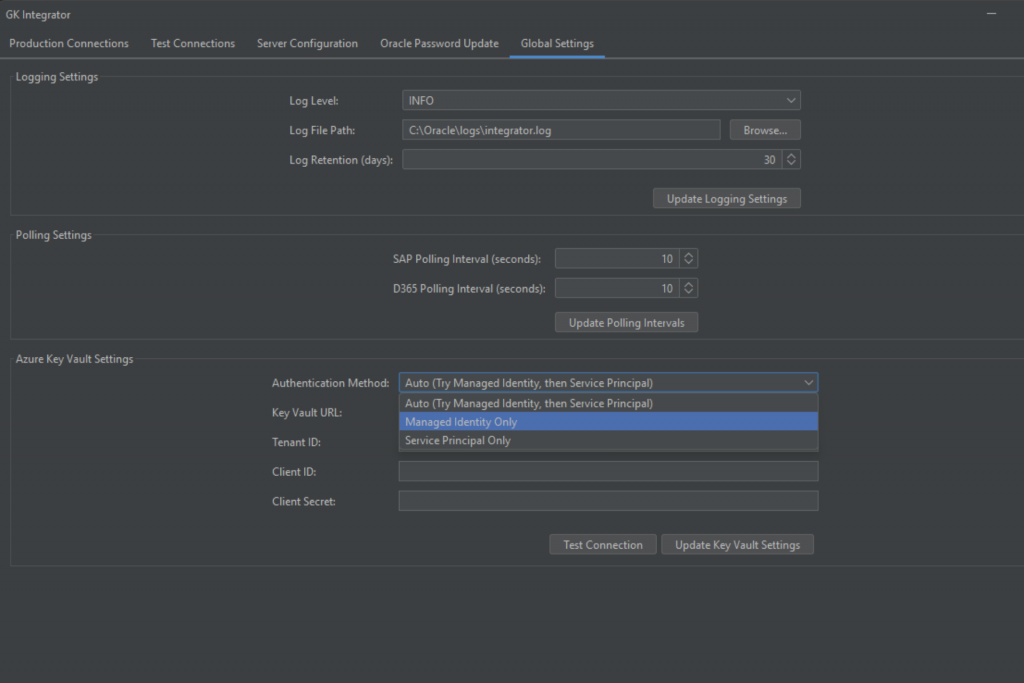
A simpler, more secure way to connect Azure with GK Integrator
GK Integrator now supports managed identity authentication
Missed us at Wood Mackenzie?
See how leading energy organisations are building more resilient connected planning models.
Long-term energy asset planning in a changing market
Energy companies are shifting from traditional forecasting to scenario-led, connected planning to make more resilient 30 – 50 year asset investment decisions in an increasingly uncertain energy market.
What problems does Oracle EPM solve in finance
Most finance teams aren’t struggling because they lack data. They’re struggling because the data is everywhere, but not connected.
Why is forecast accuracy a priority for CFOs?
Gartner (Dec 2025) found that 51% of finance leaders ranked improving financial forecast accuracy and quality among their top urgent CFO actions.
When does it make sense to implement Oracle EPM?
Key signs your finance team has outgrown spreadsheets and manual processes.
What should an Oil & Gas life-of-field financial model include?
A practical checklist covering production, price, CAPEX, tax, cash flow and Oracle EPM, with a focus on how finance teams connect operational data to long-term decisions.
How resilient is your current planning architecture?
Organisation need a model that can absorb changing assumptions, production, commodity price, cost, project timing, tax and funding, and show their effect on cash flow and returns without rebuilding the forecast every time the market moves.
Why growing Energy companies outgrow spreadsheet-based planning
Explore how why spreadsheets break at scale, how they affect energy finance teams, and what leading companies are doing to modernise their planning processes.
The hidden complexity behind carve-outs and how divestments stress test finance
Divestments create a cleaner business on paper, but a more complex reality for finance. Teams must separate entities, restate data and run parallel reporting, all while meeting ongoing deadlines.
Capital Planning in Energy & Utilities | Managing Capex, Risk & Investment Decisions
Explore how energy and utilities companies are transforming capital planning to manage multi-billion pound investments, regulatory pressure and forecast uncertainty.
What M&A, expansion and asset changes are exposing in energy planning
Explore how M&A, expansion and asset changes are exposing weaknesses in energy planning, and how leading organisations are adapting with scenario-based and integrated planning approaches.
What problems does Oracle EPM solve in finance
Most finance teams aren’t struggling because they lack data. They’re struggling because the data is everywhere, but not connected.
Why is forecast accuracy a priority for CFOs?
Gartner (Dec 2025) found that 51% of finance leaders ranked improving financial forecast accuracy and quality among their top urgent CFO actions.
When does it make sense to implement Oracle EPM?
Key signs your finance team has outgrown spreadsheets and manual processes.
A simpler, more secure way to connect Azure with GK Integrator
GK Integrator now supports managed identity authentication
Missed us at Wood Mackenzie?
See how leading energy organisations are building more resilient connected planning models.
Long-term energy asset planning in a changing market
Energy companies are shifting from traditional forecasting to scenario-led, connected planning to make more resilient 30 – 50 year asset investment decisions in an increasingly uncertain energy market.
What should an Oil & Gas life-of-field financial model include?
A practical checklist covering production, price, CAPEX, tax, cash flow and Oracle EPM, with a focus on how finance teams connect operational data to long-term decisions.
How resilient is your current planning architecture?
Organisation need a model that can absorb changing assumptions, production, commodity price, cost, project timing, tax and funding, and show their effect on cash flow and returns without rebuilding the forecast every time the market moves.
Why growing Energy companies outgrow spreadsheet-based planning
Explore how why spreadsheets break at scale, how they affect energy finance teams, and what leading companies are doing to modernise their planning processes.
The hidden complexity behind carve-outs and how divestments stress test finance
Divestments create a cleaner business on paper, but a more complex reality for finance. Teams must separate entities, restate data and run parallel reporting, all while meeting ongoing deadlines.
Capital Planning in Energy & Utilities | Managing Capex, Risk & Investment Decisions
Explore how energy and utilities companies are transforming capital planning to manage multi-billion pound investments, regulatory pressure and forecast uncertainty.
What M&A, expansion and asset changes are exposing in energy planning
Explore how M&A, expansion and asset changes are exposing weaknesses in energy planning, and how leading organisations are adapting with scenario-based and integrated planning approaches.
A simpler, more secure way to connect Azure with GK Integrator
GK Integrator now supports managed identity authentication
Missed us at Wood Mackenzie?
See how leading energy organisations are building more resilient connected planning models.
Long-term energy asset planning in a changing market
Energy companies are shifting from traditional forecasting to scenario-led, connected planning to make more resilient 30 – 50 year asset investment decisions in an increasingly uncertain energy market.
What problems does Oracle EPM solve in finance
Most finance teams aren’t struggling because they lack data. They’re struggling because the data is everywhere, but not connected.
Why is forecast accuracy a priority for CFOs?
Gartner (Dec 2025) found that 51% of finance leaders ranked improving financial forecast accuracy and quality among their top urgent CFO actions.
When does it make sense to implement Oracle EPM?
Key signs your finance team has outgrown spreadsheets and manual processes.
The hidden complexity behind carve-outs and how divestments stress test finance
Divestments create a cleaner business on paper, but a more complex reality for finance. Teams must separate entities, restate data and run parallel reporting, all while meeting ongoing deadlines.
Capital Planning in Energy & Utilities | Managing Capex, Risk & Investment Decisions
Explore how energy and utilities companies are transforming capital planning to manage multi-billion pound investments, regulatory pressure and forecast uncertainty.
What M&A, expansion and asset changes are exposing in energy planning
Explore how M&A, expansion and asset changes are exposing weaknesses in energy planning, and how leading organisations are adapting with scenario-based and integrated planning approaches.
A simpler, more secure way to connect Azure with GK Integrator
GK Integrator now supports managed identity authentication
Missed us at Wood Mackenzie?
See how leading energy organisations are building more resilient connected planning models.
Long-term energy asset planning in a changing market
Energy companies are shifting from traditional forecasting to scenario-led, connected planning to make more resilient 30 – 50 year asset investment decisions in an increasingly uncertain energy market.
What problems does Oracle EPM solve in finance
Most finance teams aren’t struggling because they lack data. They’re struggling because the data is everywhere, but not connected.
Why is forecast accuracy a priority for CFOs?
Gartner (Dec 2025) found that 51% of finance leaders ranked improving financial forecast accuracy and quality among their top urgent CFO actions.
When does it make sense to implement Oracle EPM?
Key signs your finance team has outgrown spreadsheets and manual processes.
Why do companies move from SAP to Oracle Cloud EPM?
The 5 real reasons finance teams look beyond SAP. Learn how companies like NEO Next have transformed their finance teams with faster reporting, clearer visibility, and smoother planning cycles.
Why most finance teams aren’t AI-ready
Gartner’s 2025 CIO Report reveals a hard truth: 65 % of organisations don’t have AI-ready data. Gartner part 1.
The 5 silent EPM failures finance teams discover too late
EPM success is about the process, not just technology. EPM platforms are designed to unify financial planning, but technology alone cannot transform finance processes.
Kick starting a digital transformation
Ed Graham, founder, and director at GK shares why his past experience can help clients implement a successful finance system.
Hands-on approach at a senior level
Mark Wright, Director of Planning at GK shares his experience of working in finance transformation and offers insights on what to expect when working with us.
The trap most CFO’s fall into
Gartner reveals why strategic optimisation, not reduction, defines the next generation of CFO performance. Gartner part 2.
Rehost or Replace? The Finance Modernisation Dilemma
Gartner says 59% of enterprise applications are no longer fit for purpose. Here’s how CFOs decide whether to rehost or replace legacy finance systems. Gartner part 3.
Exploring the future of FP&A
5 ways an FP&A tool will transform your finance function. GK X Coras Consulting Part 1.
A Smarter Approach to Planning and Budgeting
7 compelling advantages of NetSuite Planning and Budgeting. GK X Coras Consulting Part 2.
Why organisations are moving to Oracle Cloud EPM
The main drivers are not just cost savings, they are about capability, scalability, and improving how finance teams operate.
When is the the best time to upgrade your financial planning system?
Many organisations still rely heavily on legacy systems or Excel spreadsheets, which can limit their ability to respond quickly and efficiently to market pressures.
The silent killer of good planning
Whether you’re in travel, retail, law, logistics, or manufacturing – if you’re relying on manual spreadsheets, disconnected systems, or clunky workarounds, you’re not alone. No matter the sector, finance teams face similar planning hurdles